Expertise
Contract Drafting & Review
Counsel for governance, commercial agreements and the obligations behind business decisions.
Corporate & CommercialDiscuss a Contract or Compliance Matter

Contract Drafting & Commercial Advisory
Corporate Law
A contract that protects you costs less than a dispute that does not.
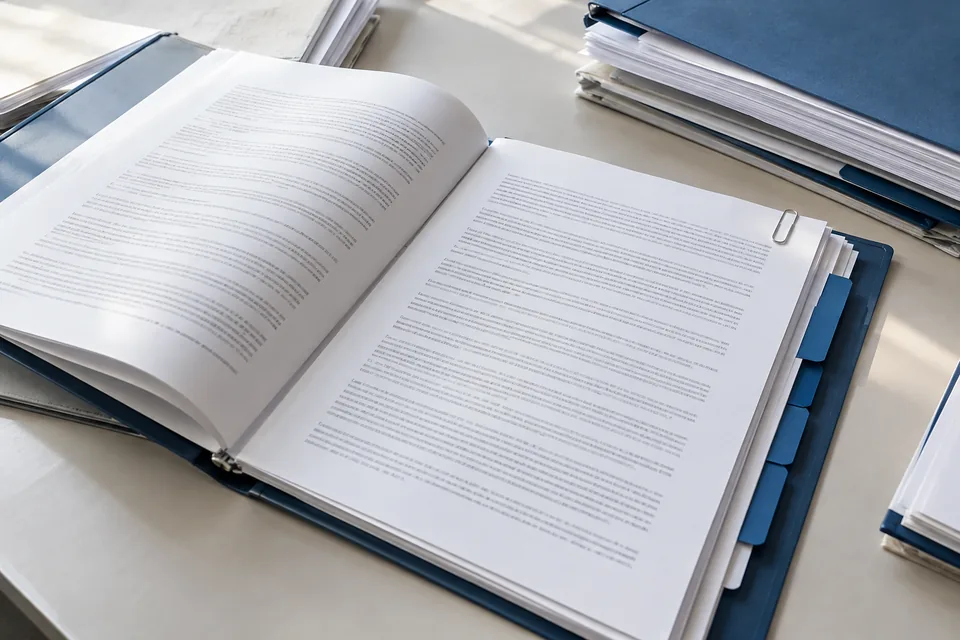
Every business relationship of consequence should be governed by a written contract. In the Philippines, the Civil Code provides the general framework for contracts, parties are free to stipulate any terms they wish, provided they are not contrary to law, morals, good customs, public order, or public policy. But freedom of contract does not mean all contracts are equal. A poorly drafted contract can be ambiguous, unenforceable, or worse, enforceable in a way that the parties did not intend.
Nopuente Law Firm provides contract drafting, review, and commercial advisory services for businesses of all sizes. We draft contracts that are clear, specific, and legally sound, and we review contracts presented by counterparties to identify risks, ambiguities, and unfavorable terms before you sign.
Legal Basis
Civil Code of the Philippines (RA 386), Articles 1305–1422
General provisions on contracts, consent, object, cause, form, and interpretation.
Electronic Commerce Act (RA 8792)
Legal recognition of electronic contracts and digital signatures.
PDRCI Arbitration Rules
Philippine Dispute Resolution Center arbitration rules for commercial disputes.
Alternative Dispute Resolution Act (RA 9285)
Framework for arbitration, mediation, and other ADR mechanisms.
Why Contract Quality Matters
The most expensive contracts are the ones that end up in litigation. A contract that is ambiguous on scope, payment terms, or termination rights creates the conditions for a dispute. A contract that lacks a clear dispute resolution clause forces the parties into court proceedings that can take years and cost more than the contract value. A contract that does not address intellectual property ownership, confidentiality, or data privacy creates risks that may not become apparent until it is too late to address them.
We approach contract drafting from a risk allocation perspective: who bears the risk of each possible adverse event, and is that allocation appropriate given the parties' relative bargaining positions, the nature of the transaction, and the applicable law? A well-drafted contract does not eliminate risk, it allocates it clearly and provides mechanisms for managing it when it materializes.
Key Clauses Every Commercial Contract Should Address
Regardless of the type of commercial contract, there are certain clauses that every well-drafted agreement should address. The absence of any of these clauses is a red flag that the contract may not adequately protect the parties' interests.
Scope and Deliverables:
What exactly is being provided? What are the acceptance criteria? How are changes to scope handled?
Payment Terms:
When is payment due? What triggers the payment obligation? What are the consequences of late payment? Is the price VAT-inclusive or VAT-exclusive?
Intellectual Property:
Who owns the work product? What pre-existing IP does each party bring? What licenses are granted?
Confidentiality:
What information is confidential? How long does the obligation last? What are the exceptions?
Limitation of Liability:
Is there a cap on damages? Are consequential damages excluded? Are there carve-outs for fraud or willful misconduct?
Termination:
What are the grounds for termination? What notice is required? What are the consequences of termination?
Dispute Resolution:
Is the dispute resolution mechanism arbitration or litigation? If arbitration, what institution and rules apply? What is the seat of arbitration?
Governing Law:
Philippine law governs most domestic contracts, but cross-border contracts may involve a choice of law analysis.
Specific Contract Types We Handle
We draft and review a wide range of commercial contracts, from simple service agreements to complex joint venture and shareholders' agreements. Each type of contract has its own specific requirements, risks, and best practices that we bring to every engagement.
What We Handle
Service agreements and professional services contracts
Employment contracts and independent contractor agreements
Lease agreements (commercial and residential)
Supply and distribution agreements
Joint venture and shareholders' agreements
Non-disclosure and non-compete agreements
Technology and software licensing agreements
Franchise agreements
Loan and credit agreements
Contract review and red-lining for counterparty-presented contracts
Frequently Asked Questions
Is a verbal contract enforceable in the Philippines?
Yes, in general. The Civil Code does not require contracts to be in writing to be valid, except for certain specific contracts (e.g., contracts for the sale of real property, contracts that cannot be performed within one year, and contracts above ₱500 in value that must be in writing to be enforceable under the Statute of Frauds). However, a verbal contract is extremely difficult to prove and enforce in practice. We strongly recommend written contracts for all significant business relationships.
Can we use a contract template from the internet?
You can, but with significant caution. Generic contract templates are often drafted for a different jurisdiction, a different type of transaction, or a different risk profile than your specific situation. They frequently lack key clauses, contain provisions that are unenforceable under Philippine law, or fail to address the specific risks of your transaction. We recommend having any template reviewed by a Philippine lawyer before use.
Legal Disclaimer: The information on this page is for general informational purposes only and does not constitute legal advice. No attorney-client relationship is created by reading this page. Laws and regulations change; the information above reflects our understanding as of the date of publication and may not reflect subsequent amendments or new jurisprudence. Outcomes in legal matters depend on the specific facts and circumstances of each case. Nopuente Law Firm makes no guarantees of specific legal outcomes. Consult a qualified Philippine lawyer for advice on your specific situation.
Discuss Your Matter
Provide only high-level information reasonably necessary for conflict and scope screening. Engagement is subject to conflict checking and written acceptance.
People
Relevant counsel and support.
Assignments follow the firm’s assessment of fit, conflicts and scope.
Related firm insights
Begin with the issue